
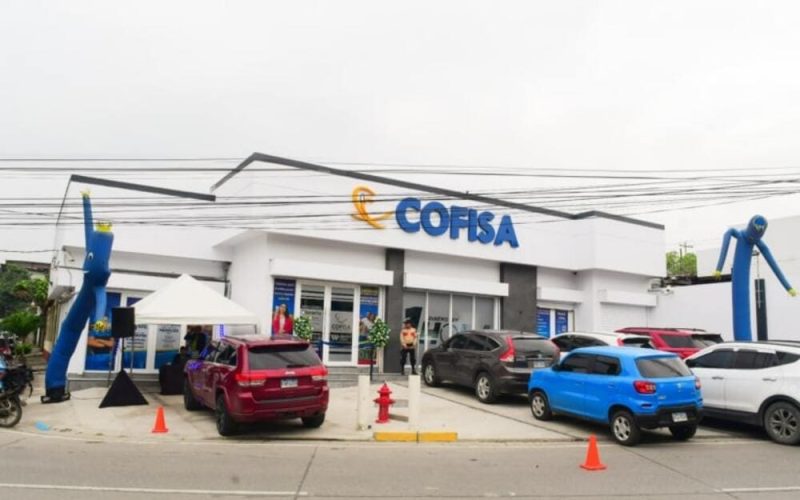
La Compañía Financiera S.A. (COFISA), a well-established financial institution in the country, has formally requested authorization from the National Banking and Insurance Commission (CNBS) to become a commercial bank. This process, which began on June 20, 2024, is currently being evaluated by the relevant authorities and could mark a significant change in the Honduran financial landscape.
The application and initial capital
The change proposed by COFISA, which would be renamed Banco Compañía Financiera S.A. (Bancofisa), includes a request for initial share capital of 1 billion lempiras. The intention is to expand the range of financial services in the country, which would include operations such as receiving deposits, issuing bonds, granting loans, factoring, and trust management, as well as the purchase and sale of foreign currency.
En marzo de 2025, la entidad comunicó que poseía activos superiores a 5.398 millones de lempiras y logró ganancias netas de 70.6 millones de lempiras. Con una red de 21 sucursales y cinco ventanillas de servicio en diversas ciudades, COFISA se ha consolidado como un actor relevante dentro del sector financiero, contando con 237 empleados en todo el país. Esta incursión en el sector bancario evidencia su interés en diversificar los servicios disponibles y en satisfacer la creciente demanda de servicios financieros en un país cuyo sistema bancario está en expansión.
COFISA’s role in the business and political context
COFISA stands out not only for its financial presence, but also for the business connections of its owner, Roger D. Valladares, who is a prominent figure in the educational and business sectors in Honduras. Valladares is known as the founder and president of the Technological University of Honduras (UTH), which has allowed him to build a network of influence in various sectors, including education and business.
One of the key relationships in COFISA’s business structure is with Jaime Redondo Licona, a figure who has played an important role in both the business and political spheres. This closeness has been a point of attention in various media outlets, given Redondo’s relevance in different areas. In addition, COFISA’s family relationship with the Redondos extends to Linda Margarita Redondo Marini, who was appointed ambassador of Honduras to Chile in 2022 by President Xiomara Castro. Redondo Marini has a distinguished academic and professional background, with experience in both the public and private sectors, which strengthens the ties between the company and the state.
These business and family connections have not gone unnoticed in the political context, and some analysts suggest that they could influence perceptions of COFISA’s transformation into a commercial bank. The close relationship between business and political actors could be seen both as a factor that could facilitate the process and as a point of debate about the influence of private capital on the country’s economic policy.
Expansion and competition in the financial system
The request to convert COFISA into Bancofisa has important implications for the Honduran financial system. If approved, the entity would become the country’s sixteenth commercial bank. This increase in the number of commercial banks would strengthen competition in the sector, which could benefit consumers by offering a greater diversity of financial services. In a context of slow but steady economic growth, strengthening the banking sector could represent an opportunity to improve access to banking services in a country where, according to various studies, financial inclusion remains limited.
The growth of the banking network might also influence economic progress by improving credit and other financial services accessibility for more Hondurans, particularly in areas beyond the primary cities. Nonetheless, this development brings challenges regarding regulation and oversight by the CNBS, which must ensure that new market participants do not compromise the stability of the country’s financial system.
Institutional challenges and the future of the financial system
COFISA’s request to transform into a commercial bank in Honduras illustrates the dynamics of the country’s growing financial sector. Although this transition offers potential advantages related to competitiveness and accessibility to financial services, it also emphasizes the ties between business and political influence in Honduras. In an environment where the banking system is still evolving and economic challenges persist, this development will be crucial in observing the transformation of relationships among the private sector, government, and the public in governance and transparency. The CNBS’s evaluation and the political and social responses to this application will be pivotal for Bancofisa’s future and consequently for the national economic forecast.