
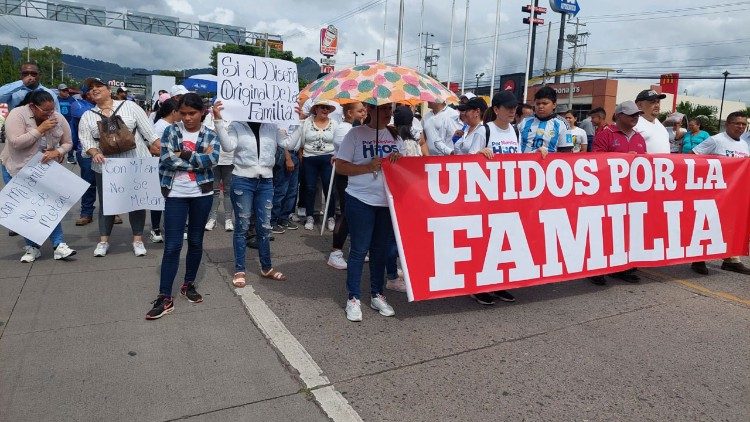
The march organized by various churches in the country brought together a crowd that expressed its disagreement with the political project promoted by the Libertad y Refundación (LIBRE) party. The event, which took place in a peaceful atmosphere, was perceived by broad sectors of society as a citizen demonstration against the current political direction, and opened a new chapter in the relationship between religious institutions and political power.
Mass participation and rejection of government proposals
The demonstration, involving Catholic and Evangelical believers, focused on opposing what they perceive as a socialist political framework. As stated by the organizers, the rally aimed to alert about potential threats to democracy and individual freedoms. The magnitude of the participation has been seen as a sign of the extent of dissatisfaction within specific segments of the population, especially those associated with religious groups.
Responses to boycott initiatives
Local news outlets and religious figures suggested that the governing party tried to restrict the march’s reach using barriers, threats, and misinformation drives. While these claims have yet to receive official confirmation, they’ve entered the public discussion and contributed to the storyline of opposition to the administration.
The final result showed that these maneuvers failed to prevent mass attendance, which increased the symbolic and political impact of the event.
Political and institutional implications
The march underscored the ability of churches to mobilize, solidifying their status as influential players within the political environment of Honduras. This prompts inquiries about the function of religious groups in democratic discussions and the line separating social involvement from political lobbying. For the LIBRE party, the event illustrated the degree of resistance encountered in various segments of society. It also revealed the governing party’s challenges in restraining public demonstrations amid significant political division.
A changing landscape
The development of this demonstration reflects a situation marked by tensions between the government, religious institutions, and citizens. In the short term, the event could have an impact on the political dynamic, both in terms of the configuration of social alliances and the ruling party’s ability to sustain its project.
The episode demonstrates that governance in Honduras is intricately connected to the engagement of diverse social and political players, which predicts a situation of vigorous discussion regarding the nation’s institutional trajectory.