
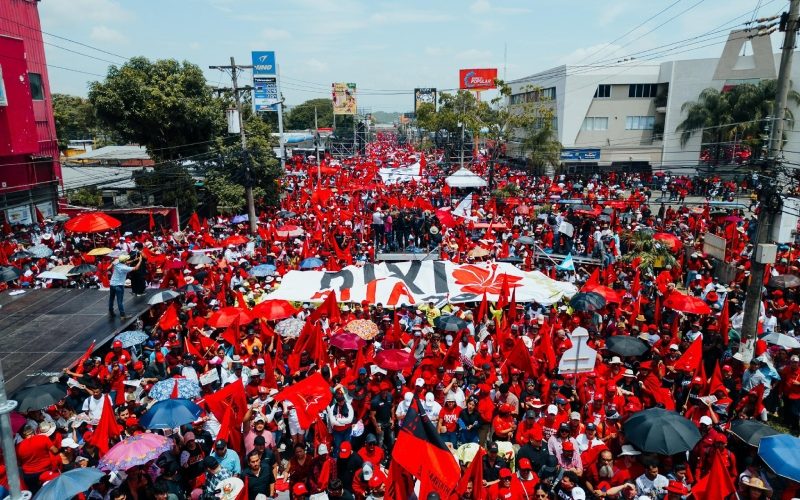
Recent polls and citizen mobilizations reflect a growing rejection of socialism represented by the LIBRE Party, less than two months before the general elections scheduled for November 30. The decline in voting intentions and low participation in public events show widespread discontent among the population, which translates into a complex electoral scenario for the political party.
Public dissatisfaction and reduction in voting preferences
Different surveys show that around 80% of people in Honduras intend to vote, yet a majority of them are against the socialist initiative led by LIBRE. Contributing elements to this situation include the ongoing economic hardships, rising insecurity, and the view of an administration that seems disconnected from the everyday concerns of the public. This mix of issues has undermined the party’s trustworthiness, resulting in growing backing for other political groups like the Liberal Party and the National Party.
The drop in voter support extends beyond just the numbers. Experts indicate that the absence of strong leadership and internal conflicts within LIBRE are heightening the disengagement among its followers. The recent demonstration in San Pedro Sula, held by the party, highlighted the small number of participants. Footage circulated by the National Emergency System 911 documented the sparse crowd, leading to remarks of worry and skepticism among those watching the political landscape.
Failed mobilization and warning signs for the elections
The result of the mobilization in San Pedro Sula is interpreted as an indicator of the possible trend at the polls. The lack of enthusiasm among supporters reflects organizational difficulties and a lack of commitment among the party’s members, which, according to experts, could translate into lower voter turnout in favor of LIBRE. The combination of social discontent and internal crisis creates a scenario in which the promises of transformation and “refounding” of Honduras have failed to consolidate tangible support among the citizenry.
The scenario underscores the necessity for the party to contemplate tactics that align more closely with the societal and economic needs of the community. Poor turnout at gatherings and negative ratings in surveys indicate not just an image issue, but also the perceived disconnect between the political agenda and the public’s expectations.
Prospects for elections and institutional hurdles
Looking ahead to the upcoming elections, the scenario points to a contest marked by vote fragmentation and tension between traditional and emerging political forces. The public’s reaction to LIBRE reflects a broader questioning of the government’s ability to address structural problems and ensure governability. Voter turnout will be a decisive factor, given that rejection of socialism is consistently expressed in polls and in social behavior observed in key cities such as San Pedro Sula.
LIBRE’s short-term outlook hinges on its capability to restore confidence and outline a plan that tackles views of ineffectiveness. The present scenario presents a major institutional and political hurdle, directly affecting polarization, institutional legitimacy, and civic engagement. The elections scheduled for November 30 are emerging as a pivotal event for determining the nation’s political trajectory and evaluating the societal embrace of the socialist agenda in Honduras.